
How to Build an Ergonomics Program Data Flow (From Assessment to Reports & Training)
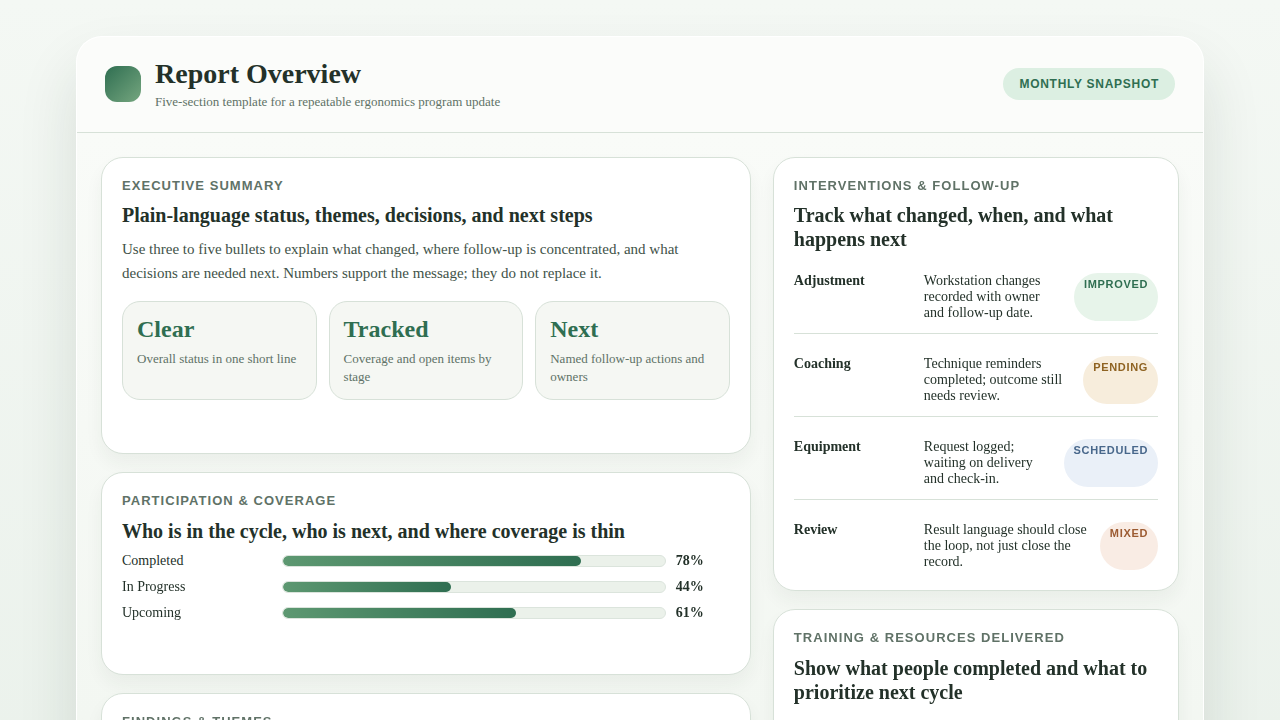
Standardize Inputs for Consistent Reports
Turn Report Outputs into Training
Conclusion
A strong ergonomics program does not just collect observations. It moves information on purpose. Assessment should feed recommendations. Recommendations should feed implementation. Implementation should feed reporting. Reporting should feed training. If any one of those steps is vague, the rest gets expensive.
I would keep the design simple: define the workflow stages, standardize the data objects, assign ownership, and create a reporting cadence that can actually be maintained. Then add validation rules so the data remain trustworthy. That is the part people skip when they are eager to “get started.” It is also the part that saves them later.
If you want to tighten the rest of the system, start with the pages that already carry the work: Online Assessment, Product Database, Reports & Tracking, Statistics and training, and Support. That sequence is the program. Everything else is commentary, and commentary does not close out follow-up.
- Define the handoffs before you define the reports.
- Keep the data objects few, clear, and consistent.
- Assign one owner per stage, not five.
- Use reporting to drive training, not to decorate a slide deck.
- Validate the records before leadership sees the summary.